PSLE Science Experiment Skills from P3 to P6
Part 3 of 3 of the PSLE Science OEQ Guide: build a full experiment answer, using everything from Parts 1 and 2.
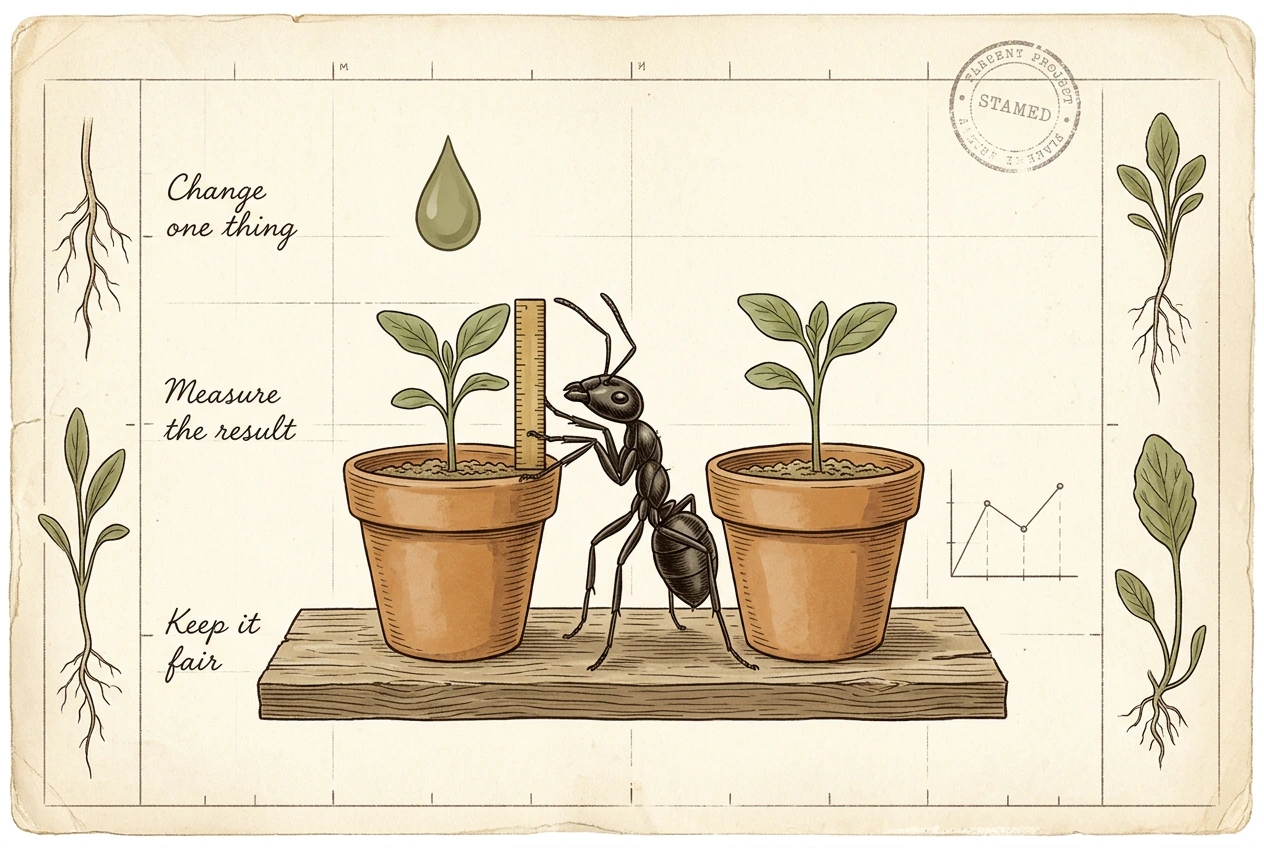
Experiment questions are tested in different ways at every level. The skills behind them start as early as P3. What changes is the science topic, how big the set-up gets, and how many steps you put together.
What it looks like at each level
In P3, the question sits in a topic you already know. Materials. Magnets. Life cycles. You look at two things, compare them, and notice what was different about them.
In P4 and P5, the topics move on. Heat, light, water, electricity, living things. Now the questions start asking you to explain things in your own words. What was this test trying to find out? Was it a fair one? What do the results show?
By P6, several of those turn up at once, in a set-up you've never seen before. You work out what the equipment is doing. You decide whether the test was fair. You read a table or a graph. Then you use what you found to explain your answer.
Schools get to these steps at different times. What matters is that it builds up over years. It isn't something you pick up in one P6 term.
The same thinking, in a new topic
The topic changes from magnets to heat to plants. The thinking behind the question doesn't change much.
You work out what is being tested. You notice what was changed and what was kept the same. You ask whether the comparison was fair. You read the results closely, then say what they mean in your own words.
No two questions ask for these in the same order. Most questions only want two or three of them. That's why there's no script to learn by heart — and why practice does more for you here than memorising does.
Where to start
Read Episode 1 next. It sets out five common parts to look for. A question may use only some of them, and each episode shows you how to answer one part.
For more tips on improving your answers—from avoiding common mistakes to using precise science language—explore the complete PSLE Science OEQ Guide.