PSLE Science OEQ Guide: How to Answer Booklet B
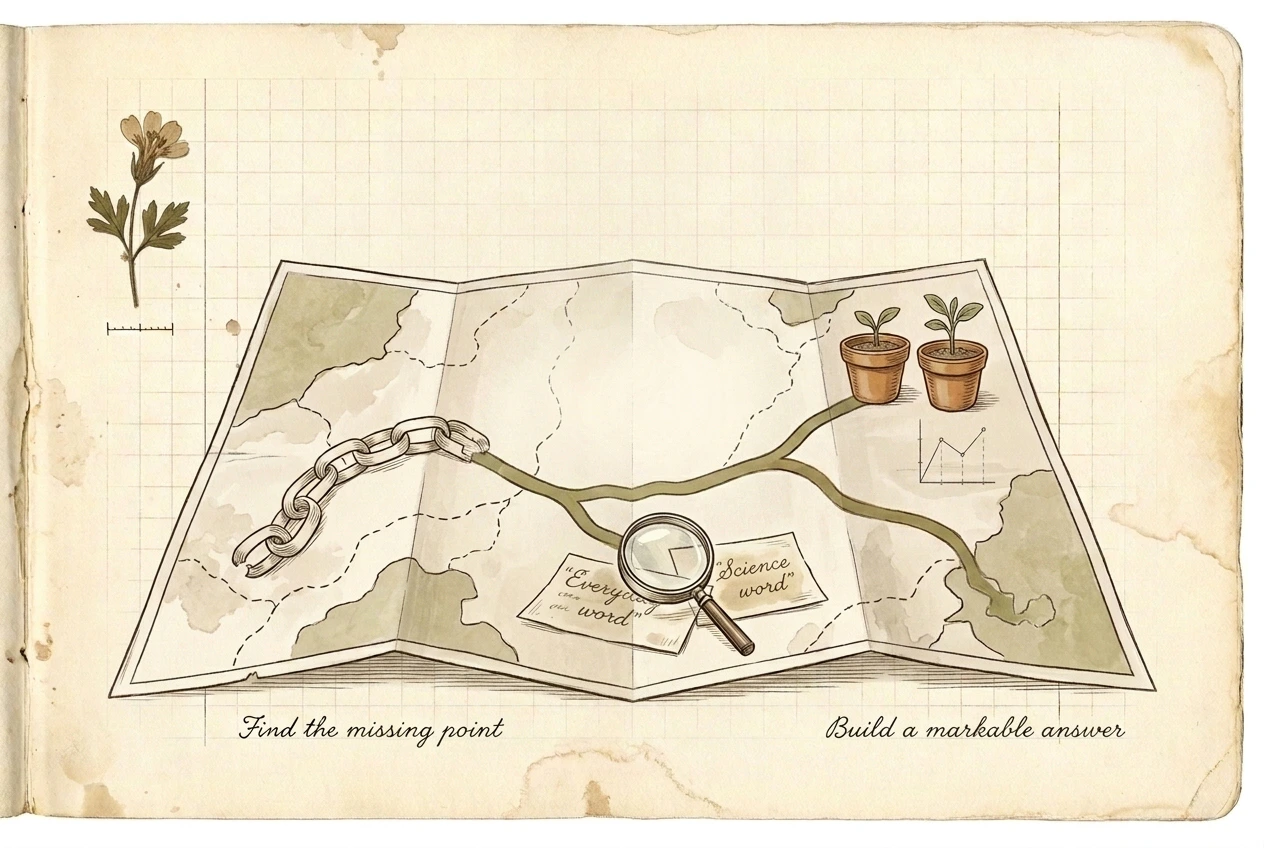
A multiple-choice question asks you to pick the right option. An open-ended question asks you to build the answer yourself. Your answer needs to show the science, not just hint at it.
In PSLE Science, Booklet B often asks you to use a science idea and show your thinking. Explain a cause and its effect. Use numbers from a table. Describe how to set up a fair test. You can know the science concept and still lose the mark, because your sentence hasn't yet written down the point the marker is looking for.
So turning what you know into a markable written answer is a separate skill. You can learn it. That's what this guide teaches, in three parts.
What Booklet B is
The PSLE Science paper has two booklets. Booklet A is 30 multiple-choice questions, worth 60 marks. Booklet B is 10 to 11 written questions, worth 40 marks.
From 2026, SEAB calls Booklet B "structured questions". Most people still call them open-ended questions. Both names mean the same paper.
Start with the part that matches the problem
Marks go missing and you can't see why. Read Part 1: Where Marks Go Missing. It names the seven common ways marks get lost. Misread command words. Missing conditions. Broken cause-and-effect chains. Each one comes with a fix. If you're not sure what the problem is, start here.
Your answer is roughly right, but it says the science concept loosely. Read Part 2: Say This, Not That. It goes topic by topic. For each phrase, you get what the everyday version gets wrong, and a phrase that says the science concept correctly. No wording is required. A different accurate answer earns the marks too.
Experiment questions are the problem. Read Part 3: How to Answer Experiment Questions. Aim, variables, fair test, results, improvements, conclusion. There is one article for each, and they use everything from Parts 1 and 2.
You want to fit this into a term. Read The OEQ Study Plan. It closes the guide with a five-phase sequence, plus P5 and P6 timelines.
Read one article. Try it on a few real questions. Come back when a different problem shows up. These are routes, not a list to finish all at once.
Next time you meet an open-ended question, let's read your own sentence back together. Is a science word missing? Is a step in the reasoning missing? Is it answering a different question from the one asked? That tells you which part to read first.