Conditions in PSLE Science OEQ Questions
Part 1 of 3 of the PSLE Science OEQ Guide: writing the answer is its own skill, and it is rarely taught. Here are the seven ways marks go missing in Booklet B.
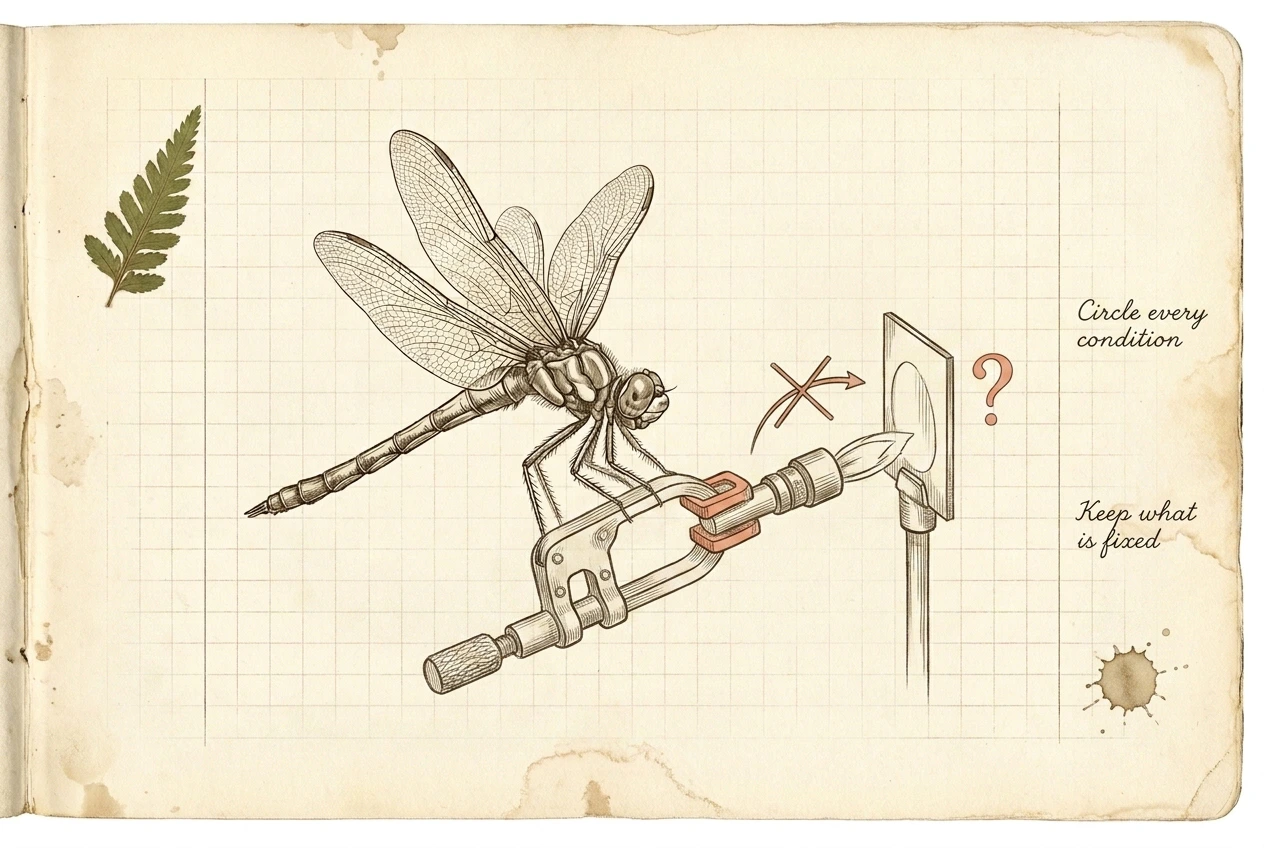
Some questions lock something in place. You'll see it in a short phrase.
- "without moving the torch"
- "using the same amount of water"
- "without changing its mass"
That lock is called a condition. It is not decoration 🎀.
Why the condition is there
The condition blocks the easy answer.
Take a shadow question. The easy answer is "move the torch closer". If the question says "without moving the torch", that answer is gone. Now you have to think about the object or the screen instead.
That is the whole point. The question is testing one piece of science. The condition makes sure you use that piece, and not an easier one.
Why the mark goes missing
Your eyes hunt for the topic. You see "shadow", so you look for the torch, the object and the screen. You start planning your answer.
The five small words that actually decide the question get skimmed.
Let's see how an underline helps.
This mistake happens less often than the others in this series. But when it does happen, it usually costs the whole question. An answer that breaks the condition can't be given the marks, however good the science concepts in it are.
That's a lot of marks to lose, and one underline is enough to catch the mistake.
Next: why restating the question does not add a point.
For more tips on improving your answers—from avoiding common mistakes to using precise science language—explore the complete PSLE Science OEQ Guide.