Cause and Effect in PSLE Science OEQ Answers
Part 1 of 3 of the PSLE Science OEQ Guide: writing the answer is its own skill, and it is rarely taught. Here are the seven ways marks go missing in Booklet B.
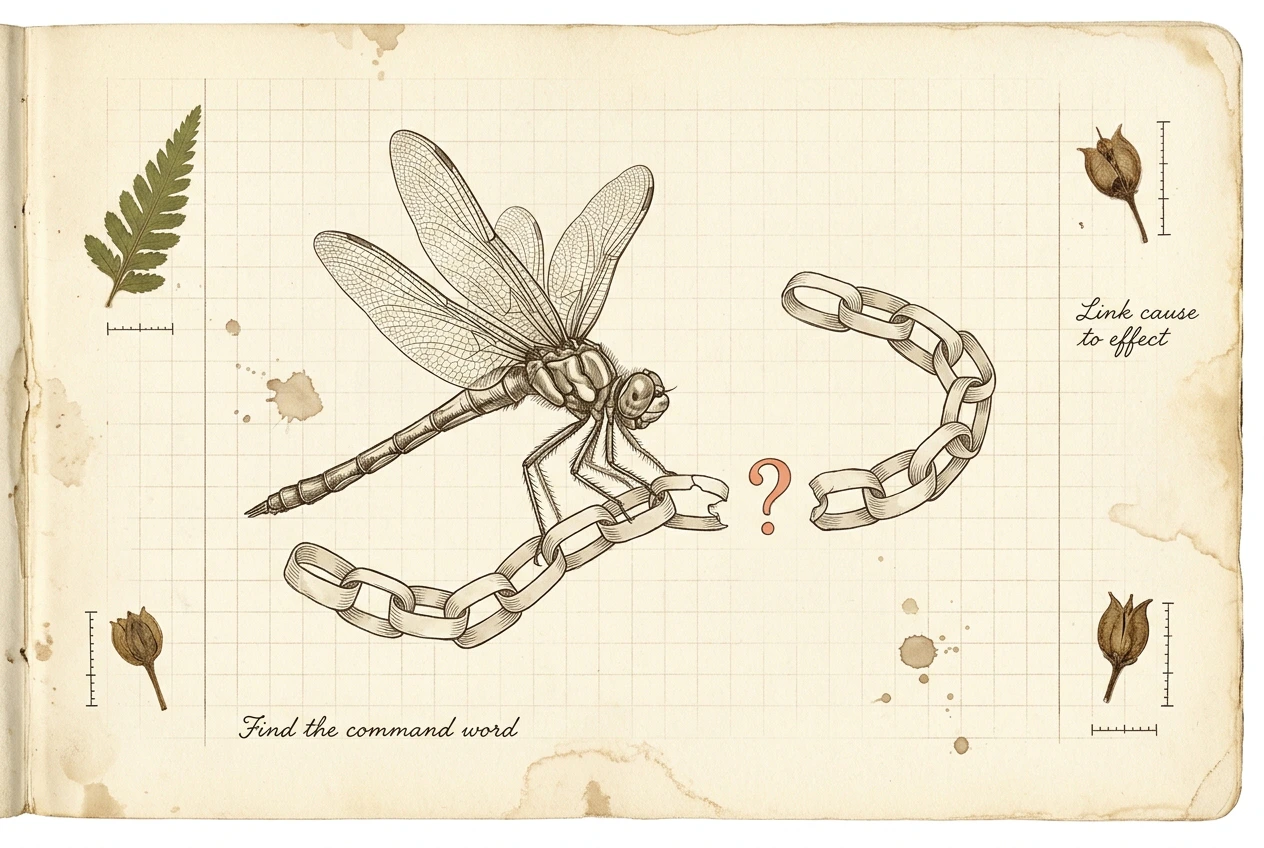
Two true statements, side by side, with nothing linking them.
In your head, the link is obvious. That is exactly why you leave it out. You don't notice it's missing, because you can see it.
Your answer needs to show the science that connects them. The reader should not have to supply the reason the question asked you to explain.
The middle is not new work
You don't have to invent anything here. The linking steps are science you already know.
Use the link that fits the question. Evaporation can explain a shrinking puddle; heat loss and condensation can explain droplets on a cold can. You do not need to write everything you know about heat.
Building those chains, topic by topic, is part of the OEQ study plan.
When the chain is too short
Sometimes there's a "so" or a "because", but the chain still skips a step.
Here's a short one:
"The can was cold, so water droplets formed on it."
Here's a concise explanation:
"Water vapour in the air lost heat to the cold can and condensed into water droplets on its outside surface."
This names where the water came from, the heat transfer, and the change into liquid water. Those ideas fit in one sentence. They do not have to be three separate points or three separate marks.
Use the question and its marks to judge the detail needed. A comparison may need you to explain a difference between two set-ups. A question about one observation may need a shorter answer.
Next: answering the topic instead of the question.
For more tips on improving your answers—from avoiding common mistakes to using precise science language—explore the complete PSLE Science OEQ Guide.